Nobody's Keeping Score, But You Finished It Anyway: The Quiet Guilt of Quitting a Show
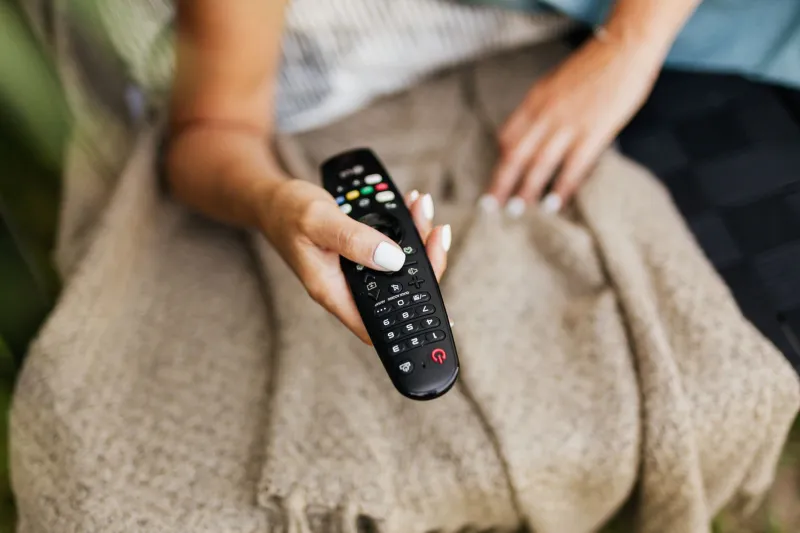
Last month, I watched the final episode of a show I cannot, in good conscience, recommend to anyone. I didn't love it. I didn't even like it by the halfway point. And yet there I was, remote in hand, watching the credit roll like I'd just completed a marathon instead of a mildly unpleasant obligation.
If you've ever done this — and statistically, you have — you've probably asked yourself the same question I did at 1 a.m.: who exactly am I doing this for?
The Completionist's Dilemma
Somewhere in the streaming era, finishing a show became a personality trait. "I stuck with it" carries the same energy as "I ran a 10K" — a small, private achievement we mention at parties like it means something.
And to be fair, it kind of does mean something. It means you gave a piece of art your complete attention for dozens of hours. It means you honored a commitment no one asked you to make. It means, on some level, you believed the story owed you a payoff and you were determined to collect.
Here's the problem: most shows don't pay off. Most shows, statistically, get worse or just... plateau. The writers' room runs out of ideas, the network orders ten more episodes, and you're still there, loyal as a golden retriever, waiting for a moment of brilliance that's never coming.
Sunk Cost, But Make It Entertainment
The psychology here isn't complicated. Economists call it the sunk cost fallacy — our tendency to keep investing in something simply because we've already invested in it. You've watched fourteen hours of a mediocre series, so quitting now would "waste" those fourteen hours.
Except those hours are gone regardless. Watching fourteen more doesn't rescue the first fourteen. It just doubles down on the loss, which is exactly what sunk cost fallacy is designed to trick us into doing.
But entertainment has a twist that makes it worse than, say, a bad stock investment: finishing feels like moral closure. We don't just want to know how it ends — we want to have been there for how it ends. There's a strange social currency in being able to say "yeah, I saw the whole thing" when a show comes up in conversation, even if your review is a shrug.
The Quitting Stigma Is Made Up
Think about how we talk about abandoning shows. "I couldn't get into it." "I need to go back and finish it." The language is apologetic, like we're confessing to a small moral failing. Nobody apologizes for putting down a novel they weren't enjoying. Nobody finishes a bad meal out of loyalty to the chef.
But TV? TV has conditioned us to treat quitting as defeat. Part of it is the old broadcast model — shows aired on a schedule, you watched when they aired, and if you bailed, you were lost forever. Streaming technically freed us from that, but the guilt stayed.
There's also the algorithm factor. Netflix and its cousins have trained us to think of a series as a completion metric. That progress bar doesn't just track episodes — it tracks your commitment. Abandoning a show at 60% feels like leaving a project unfinished, even though the only stakeholder is a recommendation engine that will forget you instantly.
A Modest Proposal: Quit More Shows
Here's my take, and I'll defend it: life is short, peak TV is infinite, and the rational move is to bail early and often. The pilot episode exists for exactly one reason — to help you decide. If a show hasn't earned episode five, it hasn't earned episode fifteen.
The counterargument, and it's a real one, is that some shows are slow burns. The Sopranos takes a few episodes to find its footing. Severance rewards patience. Fine. Give a show a fair trial — three episodes, say — and then render your verdict like an adult with a remote control and finite hours on this Earth.
What we shouldn't do is grind through eight seasons of something we resent, then wear the completion like a medal. That's not dedication. That's just a very elaborate way of procrastinating on picking your next show.
The Credit Roll Confession
So yes, I finished it. All of it. And when the credits rolled on that final mediocre episode, I felt... nothing. Not satisfaction, not closure. Just the vague recognition that I'd spent twenty hours of my one wild and precious life on a show I'd have forgotten by Thursday.
The next time I hit that familiar itch — the one that says you've come this far — I'm going to try something radical. I'm going to close the app. I'm going to let the progress bar sit there, unfinished, forever.
And if a show I quit suddenly gets great in season three? Well, that's what the internet is for. Someone will tell me. That's the beautiful thing about the streaming age: the show will wait. Your evenings shouldn't have to.