Dark Horse: Why TV's Worst People Have Become Our Favorite Characters
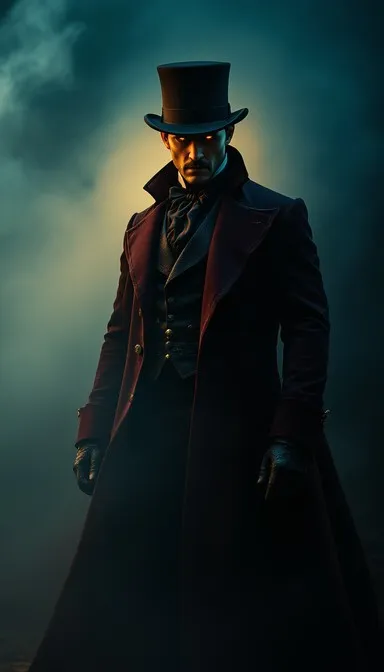
Photo: dramatic television villain dark moody cinematic portrait, via images.stockcake.com
Let's be real for a second. You've watched Walter White lie to his wife, manipulate his partner, and destroy everyone around him — and somewhere deep down, part of you was rooting for him the whole time. Don't feel bad. Millions of Americans did the exact same thing. That's not a character flaw on your part. It's actually a pretty fascinating window into how storytelling has evolved, and what it says about us as an audience.
We're living in a golden age of the morally corrupt protagonist, and it's reshaping how we think about entertainment entirely.
The Anti-Hero Isn't New — But the Love Is
Antagonists and morally gray characters have existed in fiction forever. Shakespeare was writing complex villains centuries before Netflix had a login screen. But there's a difference between respecting a well-written bad guy and actively wanting them to win. That shift — from admiration to full-on allegiance — is a relatively recent phenomenon, and streaming culture is a huge part of why it happened.
When Breaking Bad first aired on AMC, viewers were genuinely conflicted about Walter White. By the time the finale rolled around, many fans were devastated when his empire crumbled. Not because they forgot he was a murderer, but because they'd spent five seasons inside his head. The same thing happened with Tony Soprano, with Frank Underwood, with Cersei Lannister. And more recently, with Killing Eve's Villanelle — a character who kills people for sport and somehow became one of the most beloved figures in prestige television.
So what's actually going on here?
It's Not Just Binge-Watching — It's Intimacy
Here's the thing about streaming: it collapsed the emotional distance between viewer and character. When you're watching a show week-to-week on traditional TV, you have time to step back, process, and maintain a little moral clarity. But when you're three episodes deep at midnight on a Tuesday, something different happens. You're not just watching a character — you're living with them.
Psychologists call this "parasocial bonding," and it's incredibly powerful. The more time we spend with a character — hearing their internal monologue, watching their small private moments, understanding their fears and motivations — the more we extend them the same grace we'd give a real person we care about. And once that bond forms, it's hard to break, even when the character does something genuinely awful.
Villanelle doesn't just kill people. She enjoys it. She's impulsive, manipulative, and completely without remorse. And yet audiences adored her, sent fan mail about her, dressed up as her for Halloween. Why? Because Killing Eve gave us her interiority. We understood her boredom, her hunger for sensation, her twisted sense of humor. We got her — even when we couldn't defend her.
The Underdog Effect — Even When the Dog Is Feral
There's another layer to this that's worth unpacking. A lot of the villains we love aren't just complex — they're underdogs in some sense. Walter White starts as a humiliated, overlooked chemistry teacher. Tony Soprano is a man drowning in anxiety despite projecting power. Cersei Lannister spent decades being underestimated in a world that refused to take her seriously.
American audiences, in particular, have a deep cultural affinity for the self-made person clawing their way to the top. It's baked into our mythology. The hustle. The comeback. The refusal to stay down. When a character taps into that archetype — even while doing terrible things — it hits a primal chord. We recognize the hunger, even when we don't condone the methods.
Writers know this, too. The best TV villains aren't evil for evil's sake. They have a logic to them. Their choices, however dark, make sense within their worldview. And once a viewer understands that logic, empathy follows almost automatically.
What This Says About Modern Entertainment (And Us)
It'd be easy to frame all of this as a sign of cultural decay — like we've all lost our moral compass because we spent too much time streaming. But that's a lazy read. If anything, our appetite for complex, morally ambiguous characters reflects a growing sophistication in how we consume stories.
We're less interested in clear-cut good guys and bad guys because real life doesn't work that way. The most compelling people we know — in our own lives, in the news, in history — are contradictions. They do good things for selfish reasons. They do terrible things out of love. They justify their worst impulses with surprisingly coherent logic. Television that reflects that complexity feels true in a way that sanitized storytelling doesn't.
There's also something to be said for the safety of fiction. Rooting for Villanelle doesn't mean you want actual violence in the world. It means you're engaging with a story that lets you explore dark impulses at a safe remove. That's been one of the core functions of narrative art since humans started telling stories around fires.
The Takeaway
The villain supremacy isn't going anywhere. If anything, it's accelerating. Streaming platforms have figured out that morally complex characters drive engagement — people talk about them, debate them, obsess over them in ways that straightforward heroes rarely inspire. Expect more Walter Whites, more Villanelles, more characters who make you question your own moral instincts.
And honestly? Lean into it. The discomfort of rooting for someone you know you shouldn't is part of what makes great TV so compelling. It's not a bug in the system — it's the whole point.
So next time you catch yourself hoping the bad guy gets away with it, don't reach for the guilt. Reach for the remote. You're just watching great television.